Furniture as Infrastructural Stewardship
Fiskars, Finland
2025
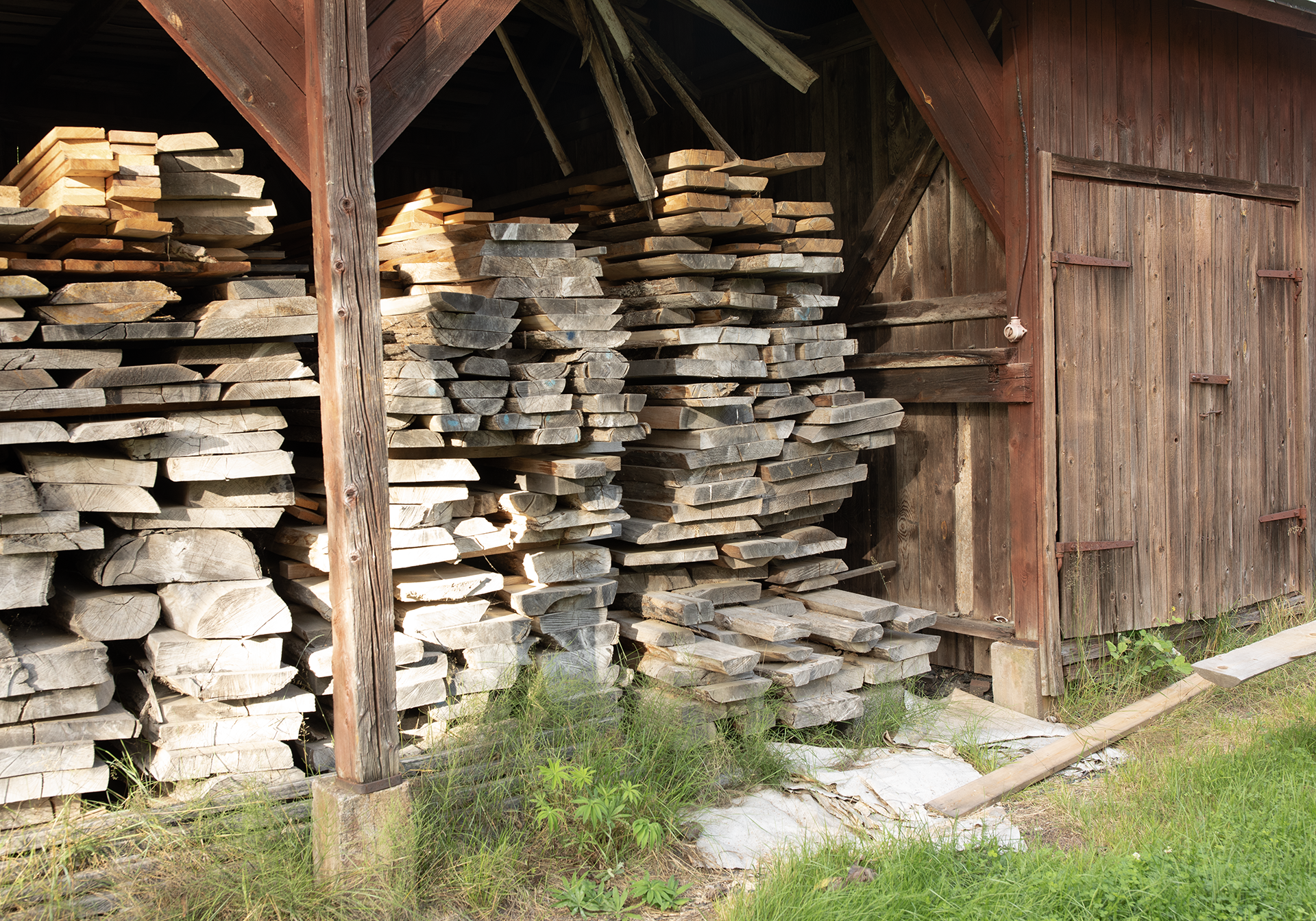
This furniture project investigates alternative regimes of material ownership and use through a set of benches fabricated from long-dried timber stored in Fiskars, Finland. The material—comprising planks of various wood species—originates from trees harvested decades earlier and subsequently held in reserve by a local carpenter. Typically understood as dormant capital awaiting future production, the stored timber is here reframed as an active spatial and social resource.
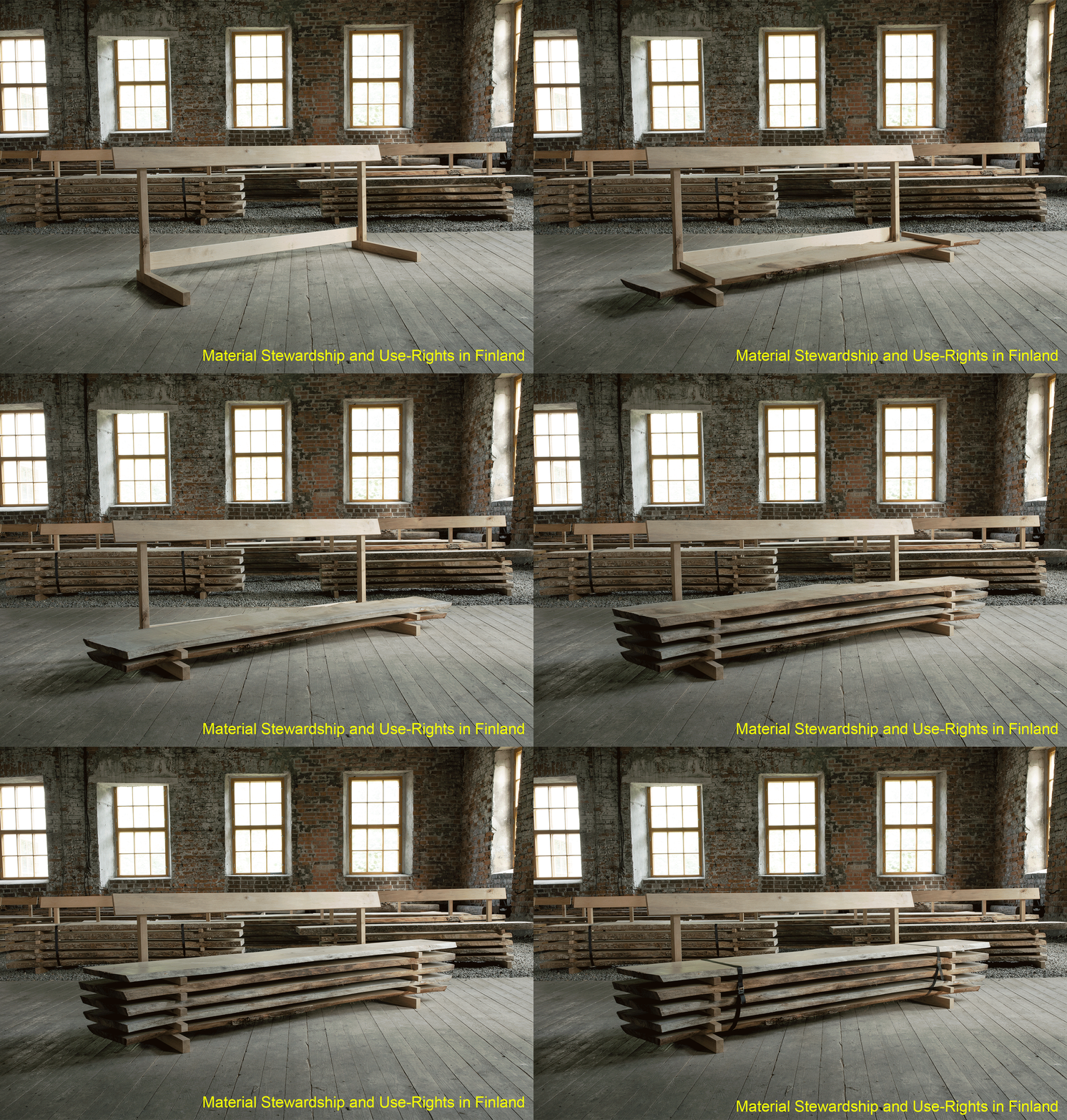
The project proposes a reversible model of use in which ownership of the material remains with the carpenter, while temporary and non-exclusive use rights are granted to a local theatre. The timber is assembled into benches without altering or degrading its material integrity, allowing the elements to be disassembled and reabsorbed into future manufacturing processes when required. In this arrangement, furniture functions not as a terminal object but as an interim spatial condition within a longer material lifecycle.
Conceptually, the project draws parallels with Finland’s Everyman’s Rights, a legal framework that grants public access to forests and natural landscapes without conferring ownership or extractive privileges. While trees in the forest may be freely enjoyed but not cut, this project extends the principle into the post-extractive phase: timber that has already been harvested, processed, and privately owned is returned to collective use without being consumed. The benches thus operate as a second commons—one that allows shared enjoyment while preserving the material’s future value.
Situated within Fiskars’ historical context of craft, forestry, and industrial production, the project foregrounds time as a critical design parameter. The decades-long drying of the wood, its temporary reactivation as public seating, and its anticipated reuse challenge linear notions of production and consumption. By decoupling use from ownership and delaying final material fixation, the project proposes a form of furniture as infrastructural stewardship rather than finished commodity.
Developed as part of an ongoing collaboration between the AA Visiting School led by Taneli Mansikkamäki, Experimental Properties, and Nikari, the project contributes to broader research into experimental property models, circular material economies, and spatial practices that negotiate between private assets and collective benefit.